
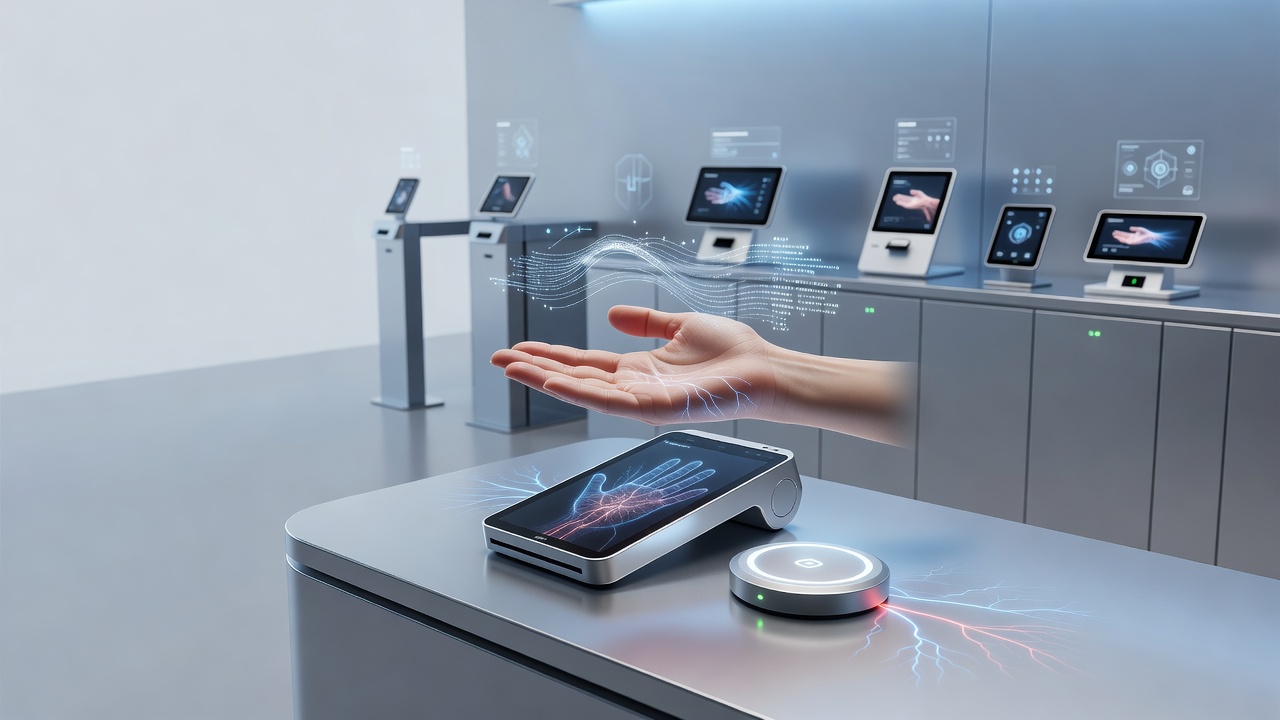
Veyns, an early-stage company building biometric identity hardware, says it plans to launch palm vein authentication readers, payment terminals and developer software by the end of the fourth quarter of 2026. The technology reads vascular patterns beneath the skin of the hand rather than relying on passwords, cards or stored images, aiming to let a person's physical presence serve as the credential itself.
How palm vein scanning is supposed to work
Palm vein authentication identifies a person by mapping the unique pattern of blood vessels under the skin, a trait that is difficult to replicate because it isn't visible on the surface. Veyns says its devices also perform liveness checks, intended to confirm that a system is interacting with an actual living hand rather than a photo, mold or other spoofed input. The company's first hardware generation includes a point-of-sale machine and a device it calls the "Bio signature disk," both built around this scanning approach.
Why the company says it avoids storing raw biometric images
According to Veyns, the system does not retain a literal image or raw scan of a user's palm vein pattern. Instead, each scan is converted into mathematical vectors, which are then processed through cryptographic hashing to produce a secure representation used only for matching during verification. The company frames this as a structural choice meant to reduce the risk of creating a centralized repository of sensitive biometric images that could be copied or exposed in a breach. These are claims made by the company; independent verification of the security architecture has not been described in available materials.
Developer tools and planned use cases
Beyond hardware, Veyns is building software development kits and application programming interfaces so that outside developers and businesses can build their own applications on top of the palm vein system. The company says it envisions use across payments, digital wallets, building access, loyalty programs, ticketing and enterprise authorization, with longer-term ambitions toward reusable identity verification, portable credentials and services spanning travel and government systems. These broader applications remain aspirational and are not yet operational.
Context and open questions
Veyns is entering a market shaped by rising concerns about AI-generated impersonation, including cloned voices and synthetic images, alongside continued password breaches and phishing. The company positions hand-based authentication as a response to that environment, following a pattern of contactless payments and facial recognition becoming mainstream. However, Veyns is described as an early-stage company preparing for launch rather than one with a shipping, independently tested product, so performance, security claims and real-world adoption remain to be demonstrated once the technology reaches the market.