
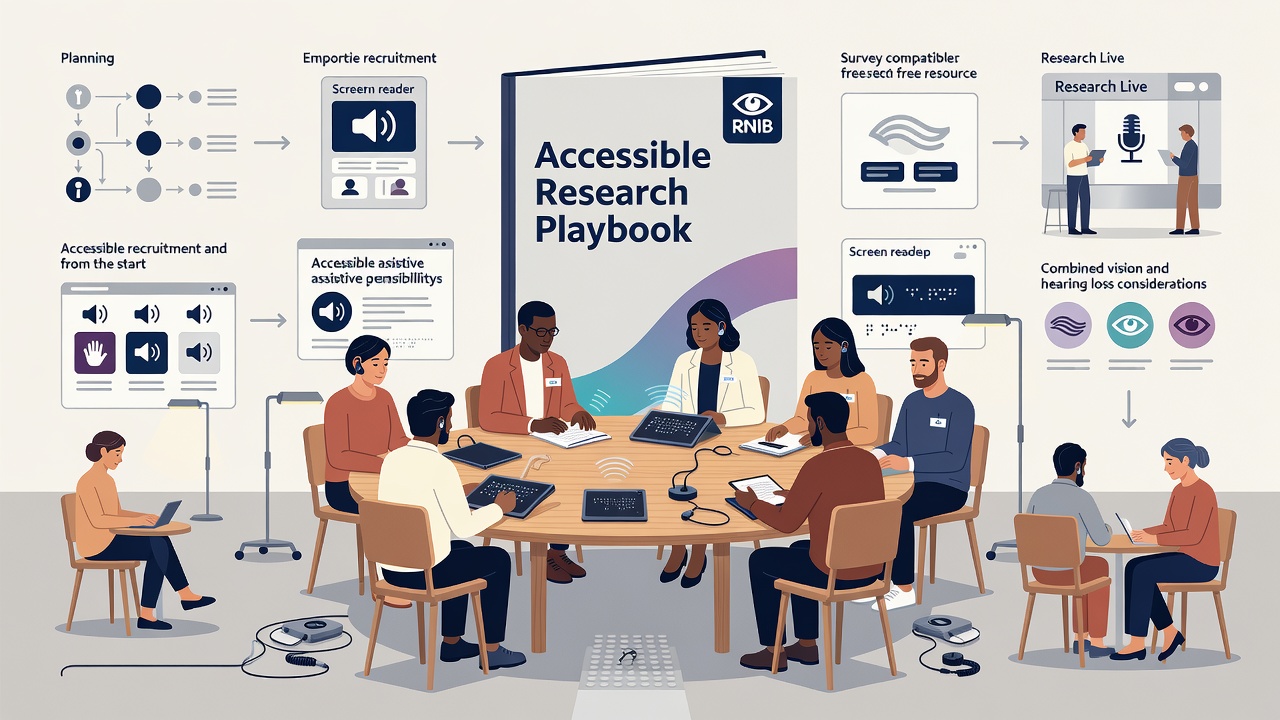
The Royal National Institute of Blind People (RNIB) has released a new guide aimed at researchers, agencies and policymakers who want to involve blind and partially sighted people in their studies. Drawing on its research team's professional work and the lived experience of disabled staff, the UK charity says the resource responds to years of requests for practical advice on running accessible studies.
Why RNIB built the guide
According to Charlotte Jones, research and insight officer for strategy and public affairs at RNIB, the organization regularly fields questions from external researchers unsure how to adapt their methods for participants with sight loss. Speaking to Research Live, Jones described the guide as a "response to years of demand we've had as a team," reflecting broader growth in interest around inclusive research practices across the sector.
Jones and co-author Jess Huke, both members of RNIB's research team, emphasized that inclusive research is not a separate or parallel process. "It's about recognising that people experience the world differently and making thoughtful adjustments so everyone has an equitable opportunity to take part and be heard," they said.
What the guide covers
The document walks through the full research lifecycle rather than treating accessibility as a single checklist item. Topics include:
- Planning inclusive research from the outset
- Understanding individual accessibility requirements
- Accessible recruitment practices
- Designing surveys that work with screen readers and other assistive technology
- Considerations for people with combined vision and hearing loss
Jones said the structure was deliberate, so that "inclusion should be thought about from the start and at every stage throughout the research process," rather than bolted on after a study design is finalized.
Collaboration with deafblind specialists
To address participants with dual sensory loss, RNIB consulted peers at the RNID (Royal National Institute for Deaf People). Jones noted the two organizations share audiences affected by combined hearing and sight loss, and agreed on specific considerations now included as a dedicated section of the guide. The document was also reviewed by agency partners, members of MRS Unlimited, and contacts at other research bodies before publication.
Who it's for
RNIB says the guide targets anyone planning, commissioning or conducting research involving blind and partially sighted people, including independent researchers, insight professionals, policy teams, charities, public bodies and commercial research agencies. The guide is available as a free download from RNIB's website.