
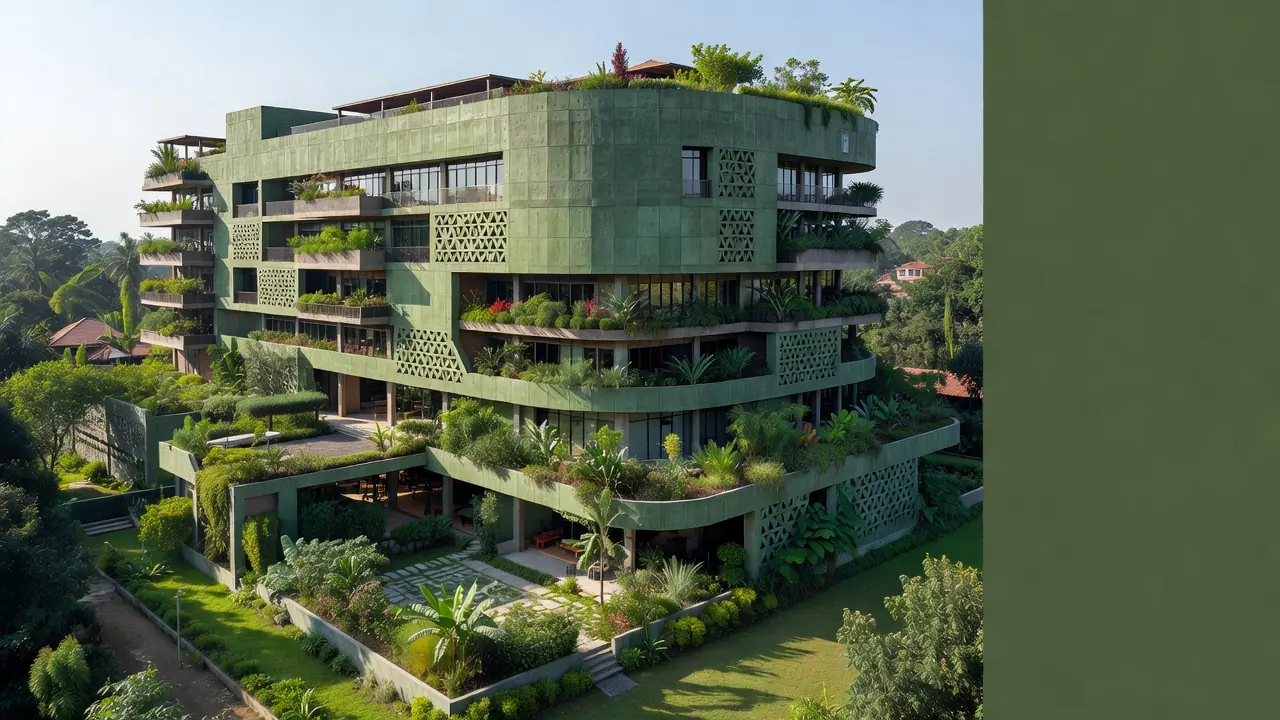
Nakshabid Architects, a 20-person studio based in Dhaka, has been named winner of the RIBA International Prize for its Green Field Factory, a rug-making facility in Rangpur, Bangladesh. The biennial award, given by the Royal Institute of British Architects to the best new building completed outside the United Kingdom, marks the fifth edition of the prize and brings international attention to a firm that has spent two decades working almost exclusively within Bangladesh.
A Factory Built Around Worker Wellbeing
The winning project, Green Field Factory, is a seven-story rug factory fronted by a large green facade and shaped by principles drawn from traditional Bengali domestic architecture. Rather than following the typical hierarchical layout of industrial buildings, the design uses passive cooling, natural ventilation and biophilic elements - strategies that bring daylight, air flow and greenery into spaces where employees work - to prioritize labor conditions over strict functional efficiency. RIBA judges highlighted this emphasis on employee wellbeing and climate-responsive design as central to the award.
Founded in 2003, Rooted in Local Context
Bayejid Khondoker established Nakshabid Architects in 2003, and the studio's body of work spans residential towers, mosques, museums and civic spaces, almost all located within Bangladesh. The firm has described its approach as one that treats each commission as a collaborative process, incorporating input from future occupants, local climate conditions and regional building traditions before design work begins. That philosophy appears across several of its notable projects, including the Aman Mosque in Narayanganj, built around a concrete form with triangular perforations that filter sunlight, and the Shaptak Insignia apartment tower in Dhaka, where a perforated concrete facade limits heat gain in the city's tropical climate.
From Museums to Graveyards: A Broader Portfolio
Other recent commissions illustrate the firm's range. The studio led a government-commissioned renovation of the Bangladesh Military Museum in Dhaka, completed in 2022, which added a 120-foot glass geodesic dome over galleries, an amphitheater and an arena. Its Urban Legacy project features twin red-brick residential towers in Dhaka wrapped in cantilevered, plant-covered balconies designed to cool interior spaces. The firm has also worked on community infrastructure tied to religious and civic life, including the Ullapara Mosque, built for cement factory workers, and the Nurpur Graveyard in Rangpur, which integrates a healthcare clinic and an education space alongside burial grounds.
What the Recognition Signals
Nakshabid Architects has framed the RIBA win as validation of Bangladeshi architecture's relevance to international conversations about climate-responsive building and labor conditions, rather than as an isolated achievement for a single project. Because the prize specifically honors buildings outside the UK, its selection of a Bangladesh-based factory underscores a broader architectural trend: judges increasingly reward projects that address local environmental and social conditions directly, rather than imported design templates.